
From Visibility to Conversion: The Creator Campaign Funnel
A creator campaign should be evaluated as a funnel: impressions create opportunities, clicks create visits and the profile must convert those visits.
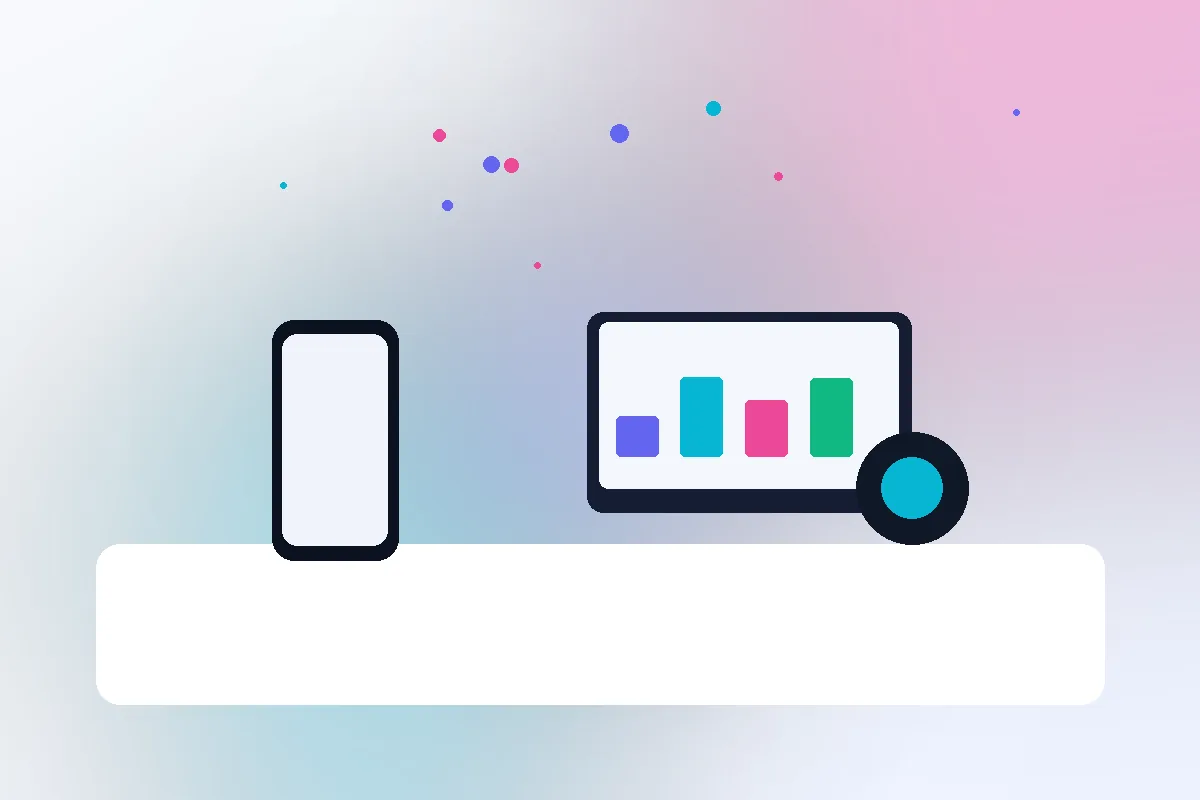
Creator marketing is a funnel. Visibility creates opportunities, the creative earns a click, the destination receives a visit and the profile then has to convert that visit into a meaningful action.
Stage 1: Impressions
Impressions are exposure, not customers. They are useful for understanding campaign scale and frequency.
Stage 2: Clicks
Clicks measure response to the placement. CTR is useful here because it normalizes clicks against the number of impressions.
Stage 3: Visitors
Visitor data helps confirm how much of the click activity turned into real destination traffic.
Stage 4: Conversion
Follows, subscriptions, purchases or messages happen after the visit. These outcomes should be measured from the destination platform when possible.
Avoid mixing stages
A campaign with strong visibility but low CTR needs a different improvement from a campaign with strong CTR but weak subscriber conversion. Keeping the funnel stages separate makes optimization more precise.
Use measured campaign data as context, not as a universal promise
Buzz Crafter statistics are designed to help creators and agencies understand how campaign metrics relate to one another. A measured campaign can show what happened in that specific setup, but it does not prove what every creator, platform, audience or placement will achieve.
The five-stage creator campaign funnel
Each stage answers a different business question. Combining them into one vague idea of “performance” makes it difficult to know what should be improved.
Stage 1: Impressions — was the promotion distributed?
Impressions describe visibility opportunities. If this stage is weak, the problem may be limited inventory, budget, placement duration or distribution. Changing the destination profile cannot solve a campaign that receives almost no exposure.
Stage 2: Clicks — did the promotion create enough interest?
Clicks connect visibility with traffic. CTR can help normalize click response against impression volume, but it remains sensitive to audience fit, creative, copy and placement context.
Stage 3: Visitors — did the destination receive the traffic?
Destination visits help validate the handoff between campaign and profile. Differences between click and visitor counts should be investigated rather than silently ignored.
Stage 4: Conversion — did visitors take the target action?
The target action may be a follow, subscription, purchase or another platform-specific event. This is the stage where profile positioning, offer clarity, pricing and trust become especially important.
Stage 5: Retention — did the acquired audience remain valuable?
A campaign that produces subscriptions can still have weak economics if retention is poor. Acquisition decisions become more accurate when churn, repeat revenue and effective subscriber value are measured over time.
Diagnose the weakest stage first
| Observed pattern | Likely focus |
|---|---|
| Low impressions | Distribution, campaign setup, inventory or budget. |
| Impressions but few clicks | Creative, hook, CTA, relevance or placement fit. |
| Clicks but fewer visits than expected | Tracking, redirects, load performance or repeat activity. |
| Visits but weak conversion | Profile positioning, offer, proof, pricing and CTA. |
| Conversion but weak economics | Retention, discounting, fees, acquisition cost and monetization. |
Why external promotion cannot measure every stage alone
An external campaign system can often measure impressions and clicks reliably. Destination visitor data may also be available. Subscription and revenue outcomes usually live inside the creator platform or CRM. A complete funnel therefore requires data from more than one system and careful attribution.
Build a practical campaign dashboard
At minimum, record campaign dates, spend, impressions, clicks, CTR and destination visitors. Add conversion, subscriber value and retention only when you have a reliable source. Keep measured fields and modeled fields visually separate.
Related tools and guides
Interpret the number in context.
Buzz Crafter separates measured campaign fields, calculated ratios and modeled scenarios. Campaign examples are specific datasets and should not be treated as universal platform benchmarks.
Explore related creator resources
Browse resources →
Creator Platform Distribution in the Famez Creators Dataset
A first-party snapshot of platform-profile distribution across the published Famez Creators directory, with scope and coverage limits.
Read more →
Creator Country & Regional Distribution
Country and DACH distribution across creator profiles represented in the Famez Creators dataset, including taxonomy coverage.
Read more →
Creator Gender Distribution
Gender-category distribution across profiles classified in the Famez Creators dataset, interpreted alongside coverage.
Read more →
Creator Topics & Niche Distribution
The most common profile topics in the Famez Creators dataset, with topic coverage and interpretation guidance.
Read more →